
How Rising Payment Fees Create Complex Legal & Compliance Risks for Payments and Software Companies
A panel discussion on surcharging and payment cost recovery with Ben Brown (Partner, Flagship Advisory Partners), Mira Boora (Co-Founder and COO, Yeeld), Theresa Kananen (Partner, Arnall Golden Gregory), and Frank Martien (Founder and Managing Partner, Windward Strategy).
Together, we explored why rising payment costs are pushing merchants toward surcharging, what it takes to run a compliant program across fragmented card network rules and state laws, and how ISOs, ISVs, and processors are approaching the opportunity across B2B, B2C, and software platforms. We also discussed how pricing transparency laws, the interchange settlement, and agentic commerce could reshape the landscape.
The presentation is available for download by clicking the PDF button in the right-hand side panel (desktop view) or below the post (mobile view).







Please don’t hesitate to contact Ben Brown at Ben@Flagshipap.com with your comments or questions.
Transcript:
Joseph | 0.01
All right, it is 1:31, so let’s get started.
Hi, everyone. Thank you so much for joining us. Today’s webinar is on surcharging and how rising payment fees can create complex legal and compliance risk for payment and software companies around the world.
With that, I will go ahead and introduce our panelists. Our panel today will be led by Ben Brown, a partner at Flagship Advisory Partners. Ben has more than 15 years of experience in advising payments in fintech companies worldwide. He has helped over 100 clients across the ecosystem
on new products, strategic partnerships, and operating model reinvention.
Ben will be joined by Mira Boora, co-founder and COO of Yeeld, where she helps SaaS platforms, marketplaces, and merchants recover credit card processing costs through compliant surcharging.
Ben will also be joined by Theresa Kananen, a partner and payments practice leader at the law firm Arnall Golden Gregory.
Theresa works with clients across the merchant acquiring industry, including ISOs, ISVs, and full-fledged processors. She advises on legal and card brand compliance, and also helps her clients litigate private and government disputes.
Our final panelist is Frank Martien, founder and managing partner at Windward Strategy.
Frank has deep experience across commercial and B2B card payments, formerly a managing director at Accenture and a longtime leader at First Annapolis Consulting. He advises issuers, networks, and fintechs on payment strategy, optimization
A big thank you to our panelists for joining us today. Without further ado, I will hand it over to Ben Brown to begin our presentation.
Ben | 1.47
Thanks, Joseph. Really appreciate that. And Joseph always does the best introductions, which is why we have him host these the last few webinars that Flagship has held. So thanks again, Joseph, and to all of our panelists here today. I know you all have super busy schedules, and so
Really appreciate you coming together to chat about the topic of surcharging and other forms of payments steering and payment cost recapture. Today we’ll spend the first few minutes talking a little bit about some facts on the market, some forecasts on how prevalent surcharging is, what are the different forms it can take, some examples of it in the market, and then we’ll spend most of the time today having a group discussion on different aspects of surcharging, and so you’ll get to hear from all of our different panelists on their different perspectives, and we might have some differing opinions across the panel, and so it’ll be really interesting to hear that out. We’d also love for people in the audience to contribute questions through the Q&A tool, and if we have time
Joseph will tee some of those up for us towards the end of the call.
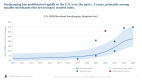
So with that, I’ll take the first few minutes of the call today just to talk about some of our points of view on surcharging. And I think, you know, to start with, we’re all here today because surcharging is more prevalent than ever. Whether you experience it as a consumer or you see it as a way to recover costs in your business, or you see it as a value-added services opportunity to enable surcharging, you know, we’re all here because this is no longer a fringe practice. Visa and Mastercard started to allow surcharging in 2013. But it really didn’t pick up until years later, both according to our personal experiences, as well as some surveys that were done in the market. We believe the proliferation of tipping during the pandemic and then the inflationary costs after the pandemic were two things that really set the stage for the explosion of surcharging over the last few years. And today, if we, you know, sort of take the average of a few different surveys out there it’s somewhere between one quarter and one third of SMBs in the US add fees for card payments today. And so definitely a big increase from the you know, 0% to 5% that we saw in the past.
And surcharging and other forms of cost sharing which we’ll get into is now common in all kinds of situations. It’s common in some industries where you have larger tickets and payments choice is not going to make or break a sale. So things like trades, professional services, B2B, government, utilities, telecom. It’s also very common in restaurants and bars and that kind of like food and drink category, but a lot less common in things like retail or travel here in the US.
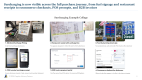
And the way these fees appear is really heavily influenced by Visa and Mastercard and American Express rules. So the networks allow surcharging for credit cards specifically, which you can see in the top left corner.
And they require disclosures at the point of sale and on receipts, which you can see an example of in the middle, so I’m not sure the rate of surcharging being applied there is allowed, and that’s why it’s positioned on that receipt example as something different than a card surcharge. The networks also allow dual pricing, which you can see in the top right corner, where you have different prices for card and cash sales.
But it’s all very complicated, as you can see on the page. And large merchants sometimes decide it’s just not worth the risk to deal with it. But small merchants often ignore the rules and do whatever they want, and that’s why you saw in the prior page that surcharging has increased so much over the last few years.
And one example of that is of merchants just kind of doing whatever they want at the smaller end of the spectrum is a story that my colleagues here at Flagship have heard me tell, which is my dentist here in Annapolis actually surcharges cards 3 to 5%.
All kinds of cards, not just credit cards, debit cards too, which you’re not technically supposed to do. And then they have printed out a big Zelle QR code and put that on the counter. When I was there yesterday, actually, and all of that was gone, so I was like, oh, they’ve stopped surcharging. That’s great but actually what they’ve done is just taken all the disclosures away. So, a great example of small merchants just kind of like playing it by ear and doing whatever they want.
Because not only are they surcharging debit cards, which they’re not supposed to do, they’re exceeding some of the caps, which we’ll talk about in a second. And now all the disclosures are gone too, and it’s just, you know, part of paying with cards.
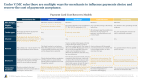
So as you think about how to comply though, which you really should try to comply, there’s a really complex web of rules to navigate, which we’ve tried our best to summarize here on this page.
And we’ll talk about each one. Each one’s a little bit different.
So it’s worth spending a second on this page so that as we get into our conversation in a couple minutes, we can use a common language.
So on this page, like, on the left, the costs fall on everybody. The fee applies no matter how you pay. The fee is really for the bona fide convenience of paying in a channel that isn’t a merchant’s typical channel. So if you’re thinking about
Paying for school fees online, or you’re thinking about paying your utility bill online, or something like that. That’s where some of these convenience fees come in, and it’s really about the cost of enabling that alternative channel.
As you move to the right, the cost shift more specifically onto card users. And then the last two columns kind of flip around that we’re not talking about an additional fee anymore. We’re actually talking about a discount instead. And those things are treated differently.
And so here’s the thing to hold on to as we go through some of these examples is what separates these is not just what you call the fee.
It’s structurally how you set it up. Who pays it, whether it varies based on how you pay, and which price you post and advertise to customers. And if you get that structure wrong, then no matter what you call a fee, it might be re-categorized as something else. Which can open you up to card brand penalties, but also, you know, broader forms of liability, which we’ll talk about during our discussion panel. Things like class action lawsuits that some companies have experienced.
So just to go through each of these real quick, convenience fees, like I said, they’re specific to a channel, not a payment method.
Service fees look similar to that, but they are actually more flexible. The trade-off is they’re only available to merchants in certain industries, so if you’re a government, education, utilities, you know, tuition, your water bill, then those merchants have an expanded right to pass through payments costs because the networks are trying to encourage more card acceptance and more usage
The middle column is what people often mean when they say surcharging. And it’s also the most regulated column on the page. So it’s only for credit cards. It’s capped. The caps vary a little bit, but it’s capped and it has a notification requirement in most cases where you have to tell your payment processor you’re going to do this, and then you also have to disclose to customers that the surcharge exists if you are going to comply with all the rules.
Like I said, the last two columns flip it around. They’re not really additional fees. They’re more discounts relative to fees. And so there’s both cash discounting, where you pay less than the posted price if you pay with cash. And then there’s dual pricing, which many of us will be familiar with from fuel stations, where you have prices that are posted, you know, it’s this much if you pay in cash, it’s this much if you pay in credit, and those prices are posted side by side with one another.
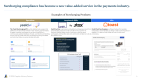
And like I said, this is all really complicated to distinguish. So there’s actually been a set of tools that have appeared over the last few years to help companies enable these. And so Yeeld is one example, and thanks, Mira, for joining us and contributing in a few minutes to the discussion. But companies like Yeeld are out there to help navigate through the complexity of all those rules, which don’t just vary by payment method and payment network, but there’s also a geographic differences based on which state you’re in on whether you’re allowed to surcharge and charge other kinds of fees in different ways.
We’ve seen acquirers and PSPs add value-added services in terms of surcharging, enablement, and compliance, and just adding those fees as part of the checkout flow is something that some acquirers and PSPs charge for. And then we’ve also seen ISVs vertical software companies like Toast enabling surcharging capability as part of their product in order to attract the small merchants that, you know, are really interested in the capabilities of those SaaS tools bring. But are really sensitive also to the costs of payments acceptance.
So the last thing I want to talk about before we switch into the discussion is just what could happen in the future? You know, this rapid rise in surcharging in the US, it’s like they say, every action has an equal and opposite reaction, right? And so
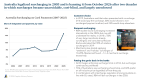
The rapid rise of surcharging is frustrating consumers. And there’s good reasons that surcharges exist, and we’ll talk about those, but also when surcharges go up really fast, it can change the political dynamic in a market of you know, whether people think that those are good or not, and what they’re going to get there, you know, their congressperson to do on their behalf. And so I think Australia is an interesting story of a market that’s been, you know, a few years ahead of us on the surcharging journey. They made surcharging legal in 2003 and they’ve actually decided to ban surcharging now later this year. And the journey there is that surcharging really exploded over the last few years in Australia, just like it did here in the US.
And when people in Australia were presented with a surcharge, about 20% said they would pay it, about 50% would switch their payment method, and about a quarter would shop elsewhere.
And so they were really effective at steering payments choice, but also when cards became almost universal, people felt like they didn’t really have an option about what to switch from. There also was really varying levels of compliance with the rules. And so just like here in the US, you see small merchants that are in many ways doing whatever they want in some cases you saw the same thing happen in Australia, where it wasn’t just, you know, up to the cost of acceptance. You can surcharge, but you started to see merchants adding weekend surcharges and public holiday surcharges, and all kinds of things that, you know, really went quite deep into the, you know the cost base, 15% public holiday surcharge you can see here, which is a really fascinating example.
And the prevalence of surcharging was also potentially higher than the central bank studies indicated. So the RBA said, you know, 15 to 20% of merchants surcharge as of last year, but really other estimates have put that more at like 50% of large merchants, or even 90% of smaller retailers based on the day-to-day experiences people are having. And most Australians, in response to that, 76% recently surveyed said that they felt like surcharging should stop. And so that was part of the political shift that happened in that market that is in the next couple of years going to bring surcharging to an end in Australia.
And so I think it’s just an interesting example of of what can happen when almost surcharging goes too far. It’s not to say that that’s the inevitable conclusion. But I do think it’s a good argument for why, as an industry, we should look at how to implement payment cost reduction strategies in a responsible way and in a really targeted way. So that they’re more sustainable.
So that’s all the slides. Hopefully helpful sort of baseline in terms of the state of surcharging here in the US and some stories from abroad. If people have any questions about that, you know, feel free to enter them into the Zoom chat, and we’ll weave them into our conversation. But over the next, you know, I think 30 min or so that we have, and Joseph, please, you know, kind of play timekeeper and keep us on track
What I would love to do is, you know, shift into a discussion. So we’re not just listening to Ben talk the whole time, but really appreciating the deep expertise that our other panelists on the line here have to bring to the table.
And so just make sure everybody you’re off mute and we’ll jump into sort of a round robin discussion. First, I’d love to Theresa kind of toss the ball over to you. We put a summary in there of what surcharging looks like for comparing surcharging and convenience fees and cash discounting
Which of those distinctions do you feel like is the most important and which of those do you feel like has a lot of sort of like legal substance to them or does it not really matter how you structure these programs?
Theresa Kananen | 16:25
Oh, I think that’s a great question because all of them matter, but they matter more or less depending on who you ask. So if you ask card brands and specifically I’ll say Visa and Mastercard because those are the brands with the most well-developed rules around these particular fee programs. A surcharge, a convenience fee, and a service fee, particularly in Visa’s rules are really well developed terms of art that have very specific components and criteria for what each one is, because Visa and also Mastercard they do payments right? They think very deeply about what all of these fees mean, and can it be card present? Can it be card not present? Is it charged by a merchant? Is it charged by an acquirer? Is it charged on credit? Is it charged on debit?
So those are all very specific things. If you go to certain State governments like Connecticut or Maine or Massachusetts, they ban surcharging. But if you look, for example, at what a surcharge is under those statutory definitions, it’s any charge assessed for presenting a payment card in Connecticut, or any particular form of payment. So it’s a very broad brush because state legislatures also worry about things like infrastructure and healthcare and taxes, and they don’t focus on payments the same way. So they paint with a much broader brush. And so are they worried about necessarily the fine distinctions that Visa or Mastercard would draw between a service fee and a surcharge? No, they just put that all in the bucket of surcharge. And so are those real distinctions? Well, it depends on who you’re asking for Visa. Yes, very real distinctions for Connecticut. That’s just an extra charge for using a card and Connecticut just don’t don’t do it.
So it depends on the lens that you’re looking through, and it can be very different things depending.
Ben Brown | 18:26
I mean, it’s super interesting and it’s confusing also how some of these terms interact because, for example, Mastercard’s convenience fee program from a few years ago actually looks really similar to Visa’s service fee program. Right, it’s pretty unbounded, but it’s only for government and utilities and or education.
What is a convenience fee for Mastercard is a service fee for Visa. I don’t think those programs are actually defined that way anymore, but how do you even communicate that to customers if one network says you have to use these words and another network says you have to use those words, but then they define them differently. It’s almost an impossible web.
Theresa Kananen – 19:09
Yeah, I think that there’s less focus on the precise words that you’re using. At least in my experience, there’s been less focus on, oh, I’ve used this nomenclature, and so I’ve solved the problem semantically, and now I don’t have to comply, or now I have complied because I’ve put the right letters on it. But to your point, it can be a real mind bender and one of the questions that I get a lot is, well, if the state says this, doesn’t the state trump the card brand rules or I’ve complied with the card brand rules so I don’t have to worry about these super annoying state laws, right? And and the answer is, it doesn’t matter so much what you call a list. Look at the mechanics, and then we have to comply with everything that’s in play. We’re looking for the lowest common denominator. So you can call it anything you want. You can call it a jelly bean fee. Doesn’t mean it is.
But let’s just let’s call it that if it makes you happy to do it. And let’s run it through all of the different rubrics. So in the state you have your jelly bean fee, or whatever it is you’re calling it, and does it comply with the state? Are we adding a surcharge, or whatever your jelly bean fee is for something that you shouldn’t. If so, then we can’t do that. We’re going to have to find another way to structure it. And let’s take your jelly bean fee over and measure it up against the card brand rules and see, does it have the right caps? Are you charging it on a card payment that you shouldn’t? Are you charging it permissibly on the
And we measure it up against all of those. And then I don’t really care what you called it. If you can make sure it runs through all of the various compliance things, regardless of the name then that’s probably an okay fee. But you’re right, all of them, you know, were sort of all of these rule sets sometimes are made in isolation, and they don’t necessarily talk to each other, and their names probably conflict, and it’s very frustrating to try and thread the needle
Ben Brown | 21:03
Do you think that the MDL 1720 settlement, if it’s approved by the court, will that simplify this web at all, or is it really focused on other issues?
Theresa Kananen | 21:16
Yeah, so for those who, Ben and I were nerding out a little bit throwing around 1720 MDL settlement for those who might be slightly less nerdy and listening, congratulations. You’re not such a big nerd as we are, talking about the multi-district litigation that’s been going on in New York since roughly the dawn of time with the card brands and a whole bunch of merchants fighting over fees and, you know, other general payment stuff in New York. And part of the settlement that’s been proposed would affect surcharging rules, and there have been a couple of settlements proposed over time. None of them have actually made it past the transom, but this one has been preliminarily approved by the court and now for months, other participants and non-participants have gotten the chance to squawk about it and say they don’t like it and hopefully it gets approved. We don’t know yet, but my thoughts on that are, it won’t make it worse.
I don’t know if it’ll make it better, but I read some of the other settlements and my thoughts on those were, well, I sure hope this doesn’t happen because it’s going to make things infinitely worse if it gets across. And I read this one and thought.
Oh, that won’t be too bad if it happens. It won’t make it worse. I don’t know. What did you think? Think it’ll make it better or worse?
Ben Brown | 22:35
I think it will probably simplify things a little bit because right now the card brands almost have these requirements of, well, you can do this, but you can’t do anything higher or lower than some other card brand. And it almost, you know, for example, Amex seems to have pretty permissive rules around surcharging, but then it says you know, you can’t surcharge us any more than any other card. And well, you can’t surcharge debit cards at all. And so, you know, a literal interpretation of that would say, well, you can’t actually surcharge Amex at all. In that case, if what they mean by other card products includes debit cards.
So it’s all very debatable today, and there’s this web that goes back and forth. So at least the settlement, I think, will simplify some of that.
Which, whether that’s a good thing or a bad thing, I guess depends on your position on surcharging, whether that’s a good or a bad thing.
But why don’t we shift to where surcharging is happening? So earlier in the discussion, you know, I put out our estimate based on surveys from some of our peer consulting firms in the space who we respect a lot. But you know quarter, a third of merchant surcharge, but I mean, Mira, every day you’re working to help merchants and platforms implement surcharging, so what are you seeing out there? I mean, what kind of merchants are actually doing this and putting these kind of programs in place?
Mira Boora | 24:01
Yeah, we launched our product around two years ago, and it’s definitely getting very popular. I think the more and more we see it, and Ben, I know you went over the stats, but like, especially over the like last year and a half, it’s increasing significantly. We’re seeing it a lot in B2B. B2B think like services, so HVAC anything where it’s, like, a high ticket, so, like, more than $1,000 usually seeing it a lot in contracting, anything where the service for the buyer has already, like, the buyer’s already committed to paying for the service, and then they’re paying for it. So if they can’t really, I guess, get out of it. So like, think like rental payments. That’s a really big one. And then we’re seeing it less in B2C. I think B2C, you have like so much competition usually. So, if there’s more competition, you’re going to see surcharges less. And so, like, I guess the stickier the product, the higher the chance you’ll see the surcharge. But along B2B. And then we’re seeing it a lot in platforms. So platforms, think like dental platforms, med practices like legal, insurance, anything like that. With platforms, their platforms are getting a lot of pressure from their sub-merchants to enable it. So, because, yeah, I think, like, with inflation and just costs going up significantly, people are just kind of scrambling to figure out how to save money. So, yeah, platforms, B2B, auction websites, insurance, yeah, it’s getting very, very popular now.
Ben Brown | 25:41
Yeah, I heard from one platform that they were basically told by their sub-merchants, restaurants basically that if you don’t enable surcharging, you know, we’re going to go to a competitor that does. And so, you know, I think some platforms and acquirers and PSPs, they see this as a new product opportunity? Oh, I can enable surcharging, and I can, you know, charge a fee for that capability. Other ones are just kind of forced into it by their sub-merchants who say, like, I’m not paying 3% or 5% like you have to give me the opportunity. And then once the functionality is there, you know you almost get into the power of defaults, and it just gets turned on by default. And so, you see, I don’t know how many sellers, you know, Square and Toast and all those guys have, but all it takes is for them to light up surcharging across 2 million merchants, and suddenly it feels very different to all of us as consumers.
Mira Boora | 26:31
Oh, it’s insane. And things like it does take time to build out, which we can go over afterwards, but like, platforms are they’re losing some merchant like they’re losing merchants to the competitors because yeah, it’s just it’s expensive. The processing fees.
Ben Brown | 26:50
Well, Mira, you said the word B2B three times, so like Beetlejuice, we have to, you know, Frank appears, and we have to talk about surcharging in the B2B space. So, I mean, it makes sense that it happens in B2B, those are often the highest cost cards, but I mean, Frank, you focus exclusively on that area. I mean, can you tell us a little bit about your experience?
Frank Martien | 27:10
Sure. Thanks, Ben. Yeah, just to complement some of Mira’s comments on the B2B side. It’s interesting you mentioned at the outset of this webinar, the 2013 lifting of the surcharge ban and honor all cards. And originally, some of the fintechs out there who did supplier enablement would use that argument. So, if suppliers said, we won’t take cards, or we’re going to surcharge they would point to that. We have seen some recent survey data suggesting, and maybe just to back up a second, oftentimes in B2B, that supplier acceptance process is bilateral. So it’s between one buyer and one supplier, and even a supplier agrees to take cards from buyer A, buyer B comes and may still need to request permission to use cards. And in those types of invoice-based payment situations, buyers are encountering surcharges about a third of the time.
So, it’s really prevalent statistics similar to what I think you were mentioning for Australia.
And when the supplier does request to surcharge.
About two-thirds of the time, the buyer will say, okay, fine, I won’t use cards, I’ll pay by ACH or check. So they’ll actually change form of payment. However, about a third of the time a buyer will often, when encountering a surcharge, will often go find another supplier. That’s obviously more possible for so-called indirect or non-strategic spend, where a buyer may have a choice of supplier versus a strategic spend category, such as inventory, where that buyer may be obliged to use the supplier.
I would be interested in Theresa’s take on this as well. It’s been a little bit of the Wild West on the B2B side. While there are these rules, regulations, and state mandates and so forth. I think B2B has mostly flown or sought to fly under the radar, given this bilateral one buyer to one supplier relationship versus a point of sale or even an online presence, Ben. So you don’t necessarily see, you know, if you had said, hey, Frank, give me a B2B example that we can put on our picture page with the receipt and with the, you know, the other examples that you gave, those aren’t always, always seen on the B2B side.
And Theresa, I don’t know if you’re aware of any litigation or anything that’s involved the B2B side, as far as surcharge or any comment there.
Theresa Kananen | 30:04
No, that certainly hasn’t come up as much. And I think that there are two reasons for that. For one, surcharging is not regulated at the federal level. It’s regulated at the state level. So it’s harder to really have sort of a class action or something in in that regard, and that the statutes that prohibit surcharging at the State level, such as they are, while they don’t necessarily speak to limitations on B2C transactions. A lot of them are enacted in the chapters of state law that have to do with consumer protection. And so, to the extent that there are complaints about them, they tend to be to bureaus of consumer protection, and you don’t tend to get complaints that are between business to business.
And to the extent that there are those kind of complaints, they would usually be, I think, resolved business to business, like business number one to business number two – Hi, what is up with this? Can we do something about it? Can you offer me an incentive? But there’s a bigger relationship there and usually more even bargaining power as opposed to an individual standing Target saying, hey, not that Target has surcharged, but I’m just picking, like, a big business saying, I don’t like this, there’s not a lot that one person could do versus a big business, and you’re more likely to get the B2C complaints.
And I think the second thing that’s in play there is that, for better or worse, it’s been Visa in the last two or three years that has really had the biggest enforcement program with surcharging compliance
And these as secret shoppers or the individuals who work at Visa who have reported compliance cases are in a B2C scenario. It’s very hard for a secret shopper to be in a B2B context and to detect a surcharge, right? Because they’re not inside companies that are in these B2B scenarios. So you’re not really getting lots of reports of B2B surcharging there that would have risen to compliance cases at Visa for whatever reason. So you’re right, you really have seen almost exclusively B2C cases of noncompliance that have gotten onto the radar.
Ben Brown | 32:23
I mean, it seems like there’s a really strong business case for surcharging, right? You can pass through, you know, these costs, which, you know, relative to the net profit margin of companies are huge, right? I mean, like, a grocer might have less than a 1% net profit margin, and they might be paying you know, 1% to 2% on cards. So you could, you know, double your net profit margin by, you know, even sharing some of these costs. But people seem to be pretty annoyed by surcharges. Consumers do. I mean, JD Power found that surcharging causes consumer satisfaction on credit cards to drop, like, 40 points, and LendingTree had a study where more than half of people think they should be illegal. But, I mean, is there any consumer benefit to surcharges that people should appreciate more? And what can merchants do to kind of communicate that better to customers?
Nobody wants to take that hot potato. I mean you know, I mean, Theresa, any thoughts? You were going for a minute there on the sort of B2B versus B2C? I mean, do you see any benefit to surcharges, or is it really something that is for the benefit of the merchant?
Theresa Kananen | 33:30
I have seen a lot of merchants grapple with the alternative of just raising prices because that is the other escape route. If you want to pass on all of your overhead costs, right, like labor, insurance, all of these things get priced into your product when you go to market.
So why not the cost of accepting a card as well? And when I try to talk people through all of the compliance concerns around it, and they start to get overwhelmed or frustrated at the complexity. I could always offer up. You could just raise your prices. And a lot of people give me what I have come to appreciate are very good reasons that they don’t want to do that. If you’re selling in a marketplace, I’ll be the only one who has
generally raised my prices and I don’t want to do that because not all of my customers pay with a credit card. Some people pay with ACH, some people still want to pay me via check. I have customers who still mail me a check every month. I have some customers who want to pay with, you know, Google Pay or whatever.
And not all those customers cost me the same money, so there’s really no reason for me to generally raise my prices to all customers and to hurt my competitive spot in the market. I really only need to surcharge the people who pay with a credit card, and there is some specific industries where people say, I don’t have that many people, maybe only 30% of my customers pay me with a credit card
So why should I raise my prices across the board and make all of my customers mad just because a third of them pay me with a credit card? So if I just add a surcharge to that third of the population that does, I cover that cost, and I don’t raise it across the board for everybody and make everybody mad. I’m just making the third that pay with the credit card a little upset, which is not great. I get that, but it’s better than
a general price raise. And I understand that point. I didn’t always I thought at first, you know maybe you just raise all your prices and don’t worry about the compliance issues, because that’s a sort of a Band-Aid solution, but I have come to appreciate that point over time, as many different merchants have raised it.
Frank Martien | 35:50
Yeah, and Ben, maybe on the B2B side, so, you know, when is surcharging good for a customer? If a supplier requests a surcharge, often that can get a conversation going, particularly if it’s a strategic relationship, as Theresa had implied in her earlier comments. And then that discussion can get into, well, why is the supplier reluctant to take cards if it relates to the transaction fee, Visa, Mastercard, Amex sometimes facilitated by fintechs such as Boost can potentially route that transaction at a lower interchange rate and reduce the transaction fee accordingly. Seeing interchange rates below 1% from time to time in that regard. And then secondly, the supplier may say, well, it’s not so much the transaction fee, but I don’t want card PANs. So there’s buyer-initiated payment that could be used, where the merchant provides already their merchant identification number, and then the buyer, through, again, facilitated through a bank or issuer or fintech, can settle that transaction directly to a merchant account.
And the other thing is, in those, particularly in the situation of lower interchange, often that buyer’s giving up some rebate, you know, cashback rebate benefit, but it does help to recenter the broader value around process efficiency, as well as working capital benefit for the buyer and supplier, which are often much greater drivers of value than a rebate may offer to a buyer.
Ben Brown | 37:40
I mean, in the both B2B world and B2C, I mean, that interplay between rebates or, you know, cash back rewards as we think of them in the consumer world and surcharges is interesting to see how that’ll play out, right? Because, like, even yesterday when I was at the dentist, you know, it was like, oh, we’ve got a 3% surcharge. Well, I’ve got a Robinhood Gold card, which pays 3% cashback everywhere. So suddenly, I don’t care about surcharges anymore. And now there’s a lot of like, extra effort being put in there to, you know, shift 3% from one pocket to another, and most credit cards don’t have a 3% cashback rate. But I do wonder if the rise of surcharging will change Americans love affair with credit cards that we’ve had for so long because they give, you know, credit, but also they give cash back rewards on everything. And when surcharges make it more expensive to use a card, the benefits you get out of the bank. I wonder if that’ll change customer behavior.
Frank Martien | 38:40
Yeah, one question back to your dentist example, I wonder with an HSA card, it seems like it would be just fundamentally wrong for a supplier to charge a surcharge if you’re trying to pay with an HSA debit card, but, I guess that’s possible.
Ben Brown | 38:58
Yeah, especially because they’re debit and they’re designed for that purpose of healthcare spend. That’s a great point.
So, Mira, we have a few minutes left. I mean, we’ve talked kind of conceptually around where it happens and should it happen, but when merchants actually put these programs in place, I mean, you guys work with them on that. What’s the most difficult thing about putting surcharge programs in place? Is it the compliance aspect, or are there other things that you have to anticipate?
Mira Boora | 39:26
Yeah, there’s a lot. If we go into the compliance aspect, like Theresa was talking about, it’s just so fragmented. Like you have the network regulations, the state regulations, there’s no federal. And then you have like, so it’s all like kind of joined together and there’s a lot of gray areas. So number one, interpreting like, what is prohibited? Figuring out the type of card. So, you can’t surcharge debit cards or prepaid knowing you surcharge credit. And in some states, you can’t surcharge every single type of card. So like in Mississippi, you can’t surcharge travel cards and like government cards. So, it’s like figuring out how, like, how to actually implement that and the technology behind it. And then layering on top of that, the taxes. So, you have to go and tax the surcharge in the majority of states in the US.
And then also, like, refunding if you do refunds, you have to go and refund the surcharge as well. So it’s actually, like, a lot of it’s, like, the compliance part, but then the technical pieces as well. And then if you’re a platform figuring out because with surcharging, you have to look at where not only the end customer is located for the surcharge, but also where the merchant’s located. So, if you’re a platform, you have to go figure out the ledgering part for that. Which states like there’s higher risk states. So, like which states your sub merchants want to opt into want to opt out of? So building all that infrastructure. So long story short, it’s really complicated, which is kind of why we exist. Yeah, and then also like, what, the cost of acceptance is. So, like, in a lot of states, you can’t ever surcharge more than what you’re being charged. And so it’s like what does that even mean? And with Theresa, I know that when you’re looking at your cost of acceptance, you can add in like service provider fees. So like if somebody’s going to be surcharging, like, if one of our merchants is surcharging, they can add in our fee on top of their cost of acceptance to then pass on to the end customer. So it’s just things like that. But yeah, surcharging is really complex. I’ve definitely learned a lot over the last two years
Ben Brown | 41:46
How long does it take to put a program in place if you decide you haven’t from the day you’re like, we should look into this surcharging thing and a company gets to the point of like calling Yeeld to actually launching a program. Is there any kind of like 80-20 sort of band?
Mira Boora | 42:04
If it’s a bigger platform, it takes about 4-6 weeks. And the reason why we’re always, like, roll it out as a beta, figure out which merchants to offer it to, and especially because, not only because of, like, the build time, but then they will see a shift from credit cards to ACH, and if they’re monetizing credit cards, that’s going to impact the bottom line.
That’s why we also see people adding on so many more like platforms adding on basis points and like adding on a really big, hefty margin to enable surcharging. But if it’s like a normal merchant, it really depends on the integration. Some of them can go live within a day, others it will take, like, a few weeks
Ben Brown | 42:44
Interesting. Well, we only have a few minutes left, so I would love to just, you know, hot takes from each of you. I mean, what’s your sort of two to five-year outlook on surcharging? You know, are we going to see it be everywhere, especially after, if the interchange settlement gets certified and the rules simplify?
Will we all be using debit cards and cash again in the future, or, you know, will people continue to use credit cards? I don’t know, Mira, why don’t you go first, and then you can sort of popcorn it over to somebody else.
Mira Boora | 43:13
Well, I hope it doesn’t get banned, obviously, but I am like a proponent of surcharging in particular cases, not for every single like I don’t like it in B2C personally, but I think B2B is fine. I think there’s going to be more regulation. I do think it’ll be at the state level just because they’ve tried to push things through the federal level and they haven’t passed. So I do think it’ll continue to be at the state level. Theresa?
Theresa Kananen | 16:25
I think we will start to see more and more state level pricing transparency laws, which are sort of the new thing that say any mandatory and unavoidable fees. If we’re surcharging is not one, if you will offer other forms of payment that don’t get surcharged. But pricing transparency laws that say any unavoidable fees have to be disclosed upfront and included in the all-in price.
And I think that there are, I think, maybe six, seven states, because Illinois just passed such a law that’s going to take effect in January of 27 will continue to proliferate. They’re very popular and will avoid sort of the drip pricing, and as long as surcharging is avoidable, I think that surcharging can go on as it has been. If you can pay via debit or ACH or some other method, but there will be further state action to try to avoid people getting surprised with unavoidable fees
Because consumers really don’t like being surprised with unavoidable fees. And I think the states are aligned to trying to protect against that. But at the same time, merchants have, I think, lobbied hard and been successful in wanting to protect their ability to pass on, their own overhead and have that preserved. That’s my two cents. What about you, Frank?
Frank Martien | 45:10
Yeah, Theresa, so I think on the B2B side, we may see gradual decline in surcharging and that thesis would be based on two things. One, I mentioned previously, getting that conversation going with the supplier and potentially seeking to reduce the interchange or transaction fee. The other thing I haven’t yet mentioned are so-called buyer-funded card programs. So, fintechs involved in that would be Plastiq, which is a sub-brand of Priority, and I mentioned Boost earlier does this as well. So, that places the transaction fee on the buyer, and then the settlement with the supplier is actually typically by ACH or check. So, the buyer gets the working capital benefit, as well as a rebate, and the supplier receives payment in a form of payment appropriate for them with reconciliation and so forth.
So, that sort of shifts the burden of, you know, in some ways that might be easier for buyers than surcharging.
Ben Brown | 46:23
I mean, I’m interested to see how some of the product concepts in the industry evolve with you know, for example, the rise of Agentic AI in payments where you could then have your agents negotiating with each other around what the surcharges could be. I mean, that could make surcharges more prevalent because it could be, you know, we’ll have transactions specific, you know, fees where we find what’s fair for both of us. That’s maybe a little bit sci-fi for now, but you could even get to a world where both surcharges, but also interchange rates themselves more in a B2B context are negotiated on every transaction. I think in the consumer world, I mean, my personal opinion would be that, you know, there’s a lot of value to a credit card beyond just the cashback rewards. And so it’s unlikely people are going to reverse course in the US on using those. Unless we have something more dramatic like interchange regulation, like they’ve had in the EU and in Australia. And so you’ll probably see people continue to use cards. You’ll probably see merchants continue to add surcharges. It’s seems maybe more likely that it’ll happen at the small business and mid-market level, because just the complexity for a national merchant of managing surcharges across the national landscape, you know could be a lot. And I’m curious to see when the first credit card whose value proposition is, you know, will rebate all the surcharges that you get assessed, just like we have free ATM fees as part of checking account value propositions. I wonder when we’ll see the first card issuer come up with that idea where they’re trying to help people avoid the pain of the surcharges by automatically, you know, refunding them as part of the rewards value proposition.
Mira Boora | 48:16
But with Agentic, could you even surcharge on Agentic? How do they agree to it?
Ben Brown | 48:25
Yeah, I mean, that’s part of what the Agentic AI promise is, is that it’s not just this sort of deterministic, like if this then do that. It’s more like, hey, go have a discussion, right? And make some decisions, and it’s almost like I was watching some venture capitalist talk, and it’s like, when the marginal cost of arguing goes to zero, what kind of things could happen? Like, for example, you could have CEO everyone writes a letter to the CEO for every flight that they have that isn’t perfect
Because all you have to do is press a button. And so, when the marginal cost of a buyer and a seller negotiating something is zero, then you could see a lot more customized things. But I think on that front, Mira, it’s actually a really good point. When I was looking at the, I think it was the Visa rules in the last few days, they actually have added some terminology about Agentic transactions in their surcharging constraints. And so, it’ll be interesting also to see how the networks use that, you know, surcharging lever to, you know, either encourage the rise of Agentic payments Or just to shape it in some ways.
Frank Martien | 49:38
Hey, Ben, just to chime in on Mira’s question on Agentic, at least within B2B, a lot of the AI use cases that we’re seeing automates the entire front end, but then still presents a manager with something they, she or he would need to review and approve manually. So perhaps the surcharge disclosure might be possible at that point. If from your perspective, that would be compliant.
Mira Boora | 50:08
Yeah, or it’s like saying like – Hey, agent, if you come across a surcharge, yes, pay, like, accept it. I don’t know, Theresa, anything on the legal front?
Theresa Kananen | 50:20
I think, as usual, the law would be lagging very far behind Agentic Commerce and all that kind of programming, because the laws are written years behind all of that, and then there would be some kind of a challenge as under laws that never contemplated Agentic commerce as to whether it was unfair or deceptive, and then the courts would be grappling with a law that was written before the technology existed trying to apply it. Just like the laws currently try to apply laws written in the 70s to the Internet. So, kind of a square peg and round hole situation. So, something on the legal side, yes, but I would hardly call it bespoke. So, the law is usually not the best sort of tool for evaluating innovation.
Joseph Kraut | 51:17
So just to chime in here, one question from the audience. I think this is for you, Mira. The question was, does Yeeld have a program or service specifically geared to aid in compliance with Visa’s service fee model for education or government merchants
Mira Boora | 51:34
Service fees. Unfortunately, not, no. We only do surcharging. I think with Visa and also Mastercard, my recommendation would be to talk to your, like, your processor and your acquirer, because I know it is can be a little bit hard to even get approved for those programs. I’ve had a lot of customers be like, just going to label it a service fee or convenience fee, and I don’t need to register. And I’m like, you should look into that. But no, we only help with surcharging.
Joseph Kraut | 52:10
Got it. Thank you so much. Well, that’s it for the audience questions. Thank you so much, guys. I really enjoyed listening in to this discussion. I think it was super interesting and I really appreciate everyone in the audience for joining. Thank you so much for a great webinar, and I think we will wrap up here. So thank you so much, guys.
Ben Brown | 52:29
Thank you, Joseph, and thanks to all the participants.