
M&A activity in fraud and digital identity is accelerating, with providers increasingly acquiring capabilities to build broader, integrated risk and trust platforms.
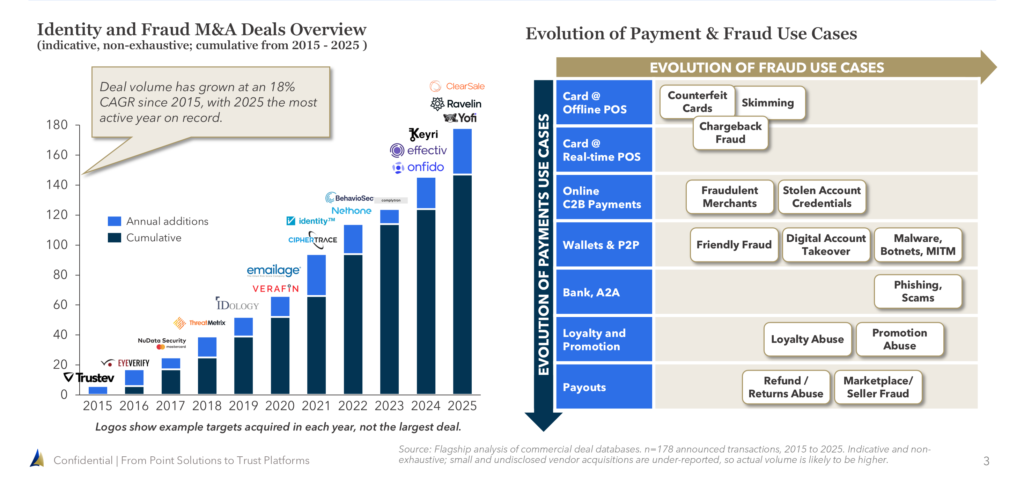
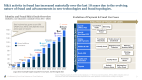
- M&A activity has accelerated materially, driven by the proliferation of fraud use cases, increasing sophistication of fraud typologies and emergence of new technologies; deal volumes grew at ~18% CAGR between 2015–25, with 2025 the most active year on record.
- M&A is increasingly capability-led, with providers expanding beyond traditional point solutions to build broader platforms spanning identity, fraud prevention, compliance, and risk decisioning across the customer lifecycle
- Merchant fraud management is expanding beyond transaction fraud into broader digital risk, with acquisitions targeting account takeover (ATO), bot detection, identity fraud, behavioral intelligence, and digital abuse; competition to own merchant distribution is intensifying, with PSPs/acquirers embedding fraud capabilities into their propositions
- Issuer fraud management M&A is shifting from transaction fraud engines towards differentiated data and decisioning, as mature fraud models drive providers to acquire upstream identity/behavioral signals, proprietary intelligence, and orchestration capabilities to improve detection and risk interventions
- Digital identity providers are consolidating point solutions into end-to-end trust platforms, combining document verification, biometrics, device intelligence, reusable identity, and adjacent fraud capabilities; intelligent orchestration is emerging as a critical control point for integrated risk decisioning
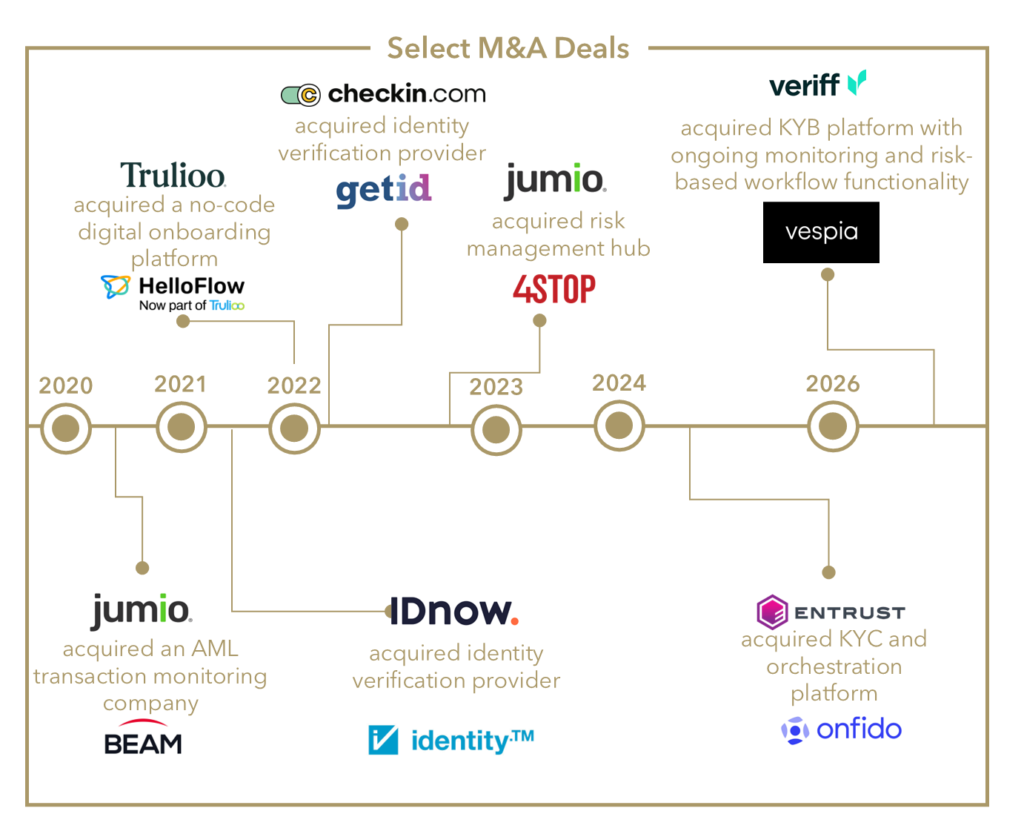
- KYC/AML specialists are expanding from point-in-time onboarding to continuous lifecycle risk management, acquiring KYB, AML screening, transaction monitoring, fraud intelligence, and orchestration capabilities to enable dynamic, risk-based customer monitoring
- Across segments, proprietary data, differentiated risk signals, and intelligent orchestration are emerging as key M&A priorities, enabling providers to integrate capabilities, improve decision quality, and capture a broader share of the fraud and financial-crime value chain
M&A activity in fraud has increased materially over the last 10 years due to the evolving nature of fraud and advancements in new technologies and fraud topologies.
Merchant Fraud Management
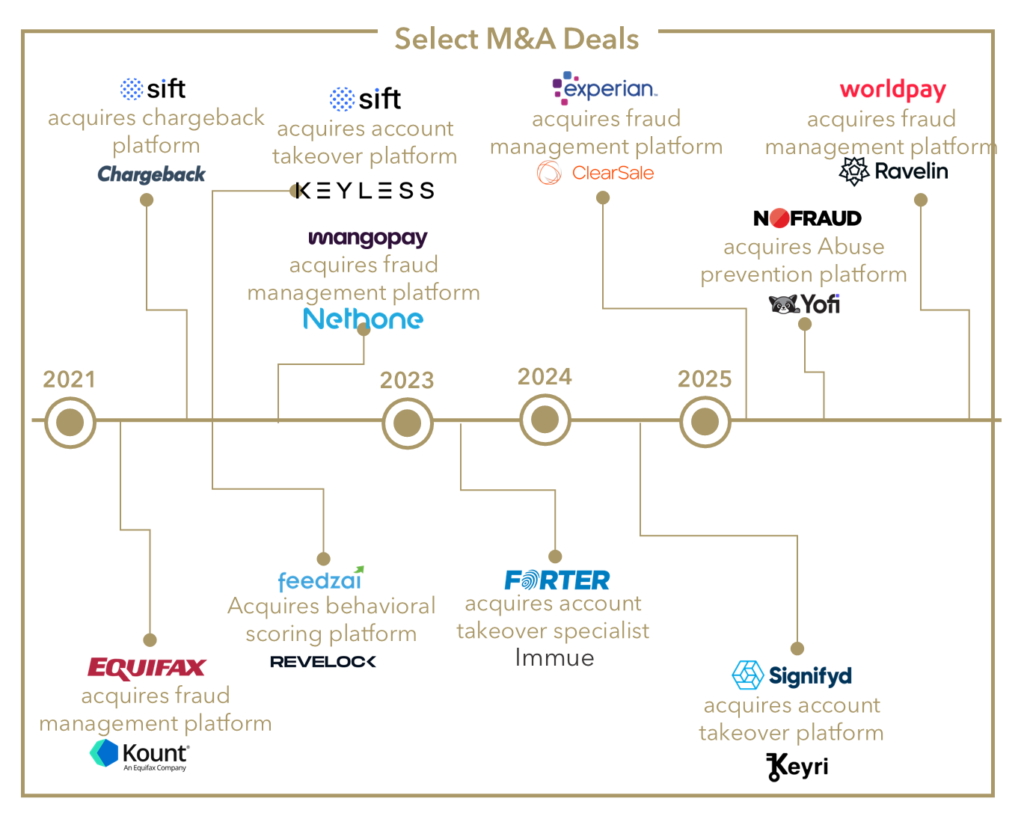
Merchant fraud M&A is increasingly capability-led, as providers expand beyond transaction fraud into the broader digital risk and identity stack. M&A is expanding merchant fraud beyond transaction monitoring into broader digital risk, and race towards who owns the merchant distribution.
- Value pool shifting beyond transaction fraud into ATO, bot detection, identity fraud, refund / promo abuse and other forms of digital abuse and scams driving vendors to acquire capabilities outside traditional payment fraud.
- Fraud platforms are expanding upstream, acquiring identity, behavioral and device-level signals to identify fraud activity earlier in the customer journey, before a transaction reaches checkout.
- Fraud, identity and cyber capabilities are increasingly converging, with merchant fraud vendors using M&A to add account protection, authentication and digital-abuse capabilities as fraud increasingly moves beyond the payment transaction itself.
- Distribution is becoming increasingly strategic, with PSPs and acquirers acquiring fraud capabilities to deepen the merchant relationship and embed fraud prevention directly into their broader proposition (e.g., Worldpay acquired Ravelin). New growth levers across ISVs, platforms as payments distribution shifts increasingly to ISVs.
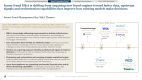
Issuer Transaction Fraud
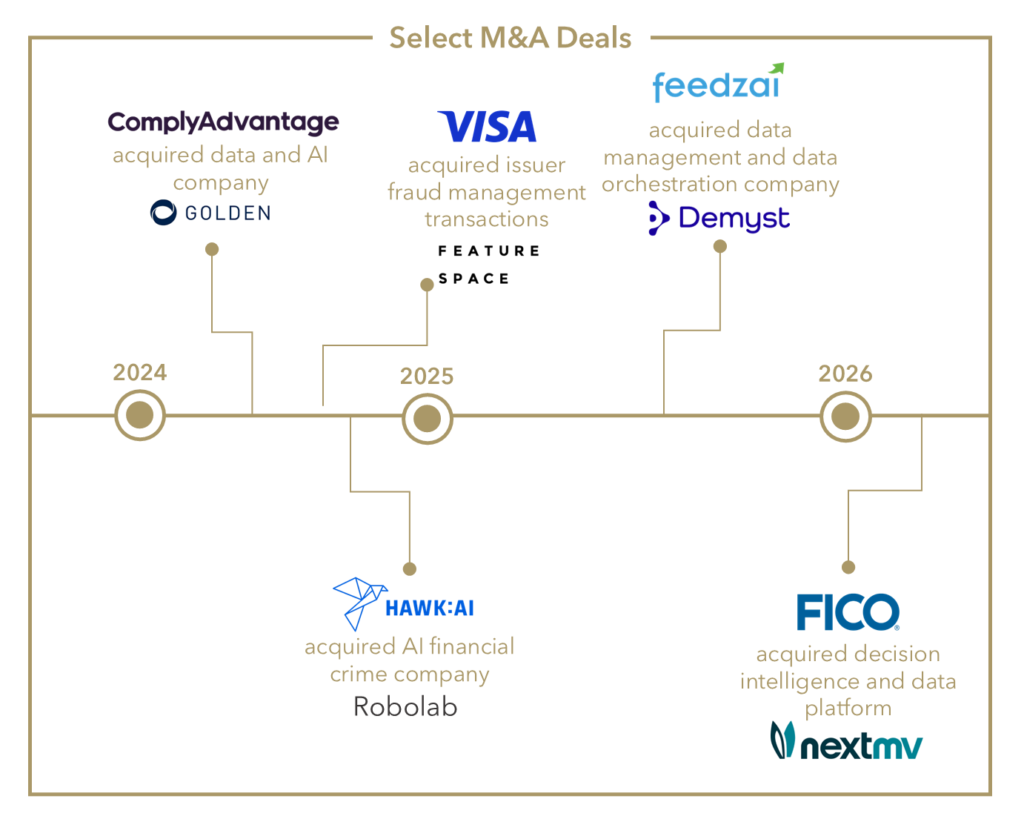
Issuer fraud M&A is shifting from acquiring new fraud engines toward better data, upstream signals and orchestration capabilities that improve how existing models make decisions. The market is increasingly focused on acquiring better signals and decision orchestration rather than simply improving mature transaction fraud models.
- M&A is increasingly addressing improvements in decision infrastructure, with issuer fraud vendors acquiring data, orchestration and intelligence capabilities that strengthen how existing models ingest signals, make decisions and trigger interventions.
- Core transaction fraud models are relatively mature, meaning incremental improvements increasingly come from acquiring new data, signals and intelligence rather than simply developing another detection model.
- Vendors are acquiring upstream identity and behavioral signals to improve detection of risks such as ATO and identity theft before they materialize as fraudulent payment transactions.
- Decisioning and orchestration are becoming strategic acquisition targets, enabling fraud platforms to combine multiple internal and external signals and dynamically determine the appropriate risk intervention.
- Issuer fraud platforms are expanding into broader financial-crime and AI-driven decisioning capabilities, increasingly bringing fraud, AML, data intelligence and risk orchestration together within a single platform.
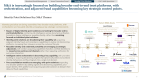
Identity Point Solutions
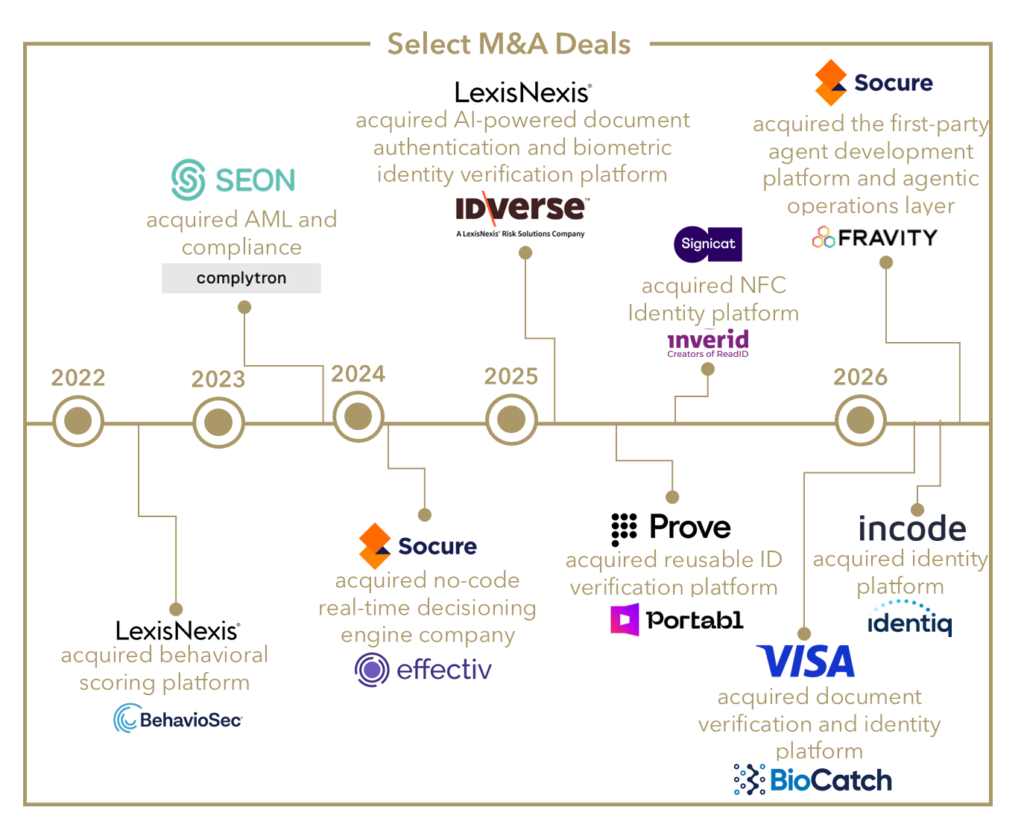
M&A is increasingly focused on building broader end-to-end trust platforms, with orchestration, and adjacent fraud capabilities becoming key strategic control points. Identity specialists are being assembled into broader trust platforms, with orchestration and reusable identity emerging as key strategic control points.
- Buyers of digital identity point solutions are looking for broader end-to-end trust platforms, combining risk intelligence across document verification, biometrics, device intelligence, reusable identity, rather than remaining focused on individual point solutions.
- Identity point solutions are broadening their capability set, acquiring adjacent identity, fraud, and compliance capabilities to evolve into decisioning platforms, increasing their relevance across the customer lifecycle
- Reusable identity and credential portability are emerging as strategic adjacencies, with vendors acquiring capabilities that allow verified identities to be reused across services and channels rather than repeating verification for every new interaction.
- Intelligent native orchestration is becoming a key capability, with providers building or acquiring decisioning engines that dynamically select and combine identity, behavioral, and fraud signals into a single risk decision.
- Two consolidation models are emerging, with point solutions expanding into broader platforms by adding signals and decisioning capabilities, and larger identity / KYC platforms are acquiring specialist solutions to deepen their data and fraud capabilities.
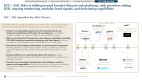
KYC (Know Your Customer) / AML (Anti-Money Laundering) Specialists
KYC / AML M&A is shifting toward broader lifecycle risk platforms, with providers adding KYB, ongoing monitoring, modular fraud signals, and decisioning capabilities. The market is shifting from point-in-time verification toward continuous, orchestrated risk management across the customer lifecycle.
- Providers are expanding beyond one-off onboarding checks into continuous monitoring and lifecycle risk management, using M&A to maintain visibility over customers after the initial verification event.
- M&A is extending the KYC proposition into adjacent capabilities, including KYB, AML screening, transaction monitoring, and fraud signals, allowing providers to cover a broader share of the financial-crime value chain.
- Decisioning and intelligent orchestration are becoming more important, allowing platforms to dynamically combine identity, compliance and fraud signals and determine which checks are required for each customer or risk event.
- Broader platforms are acquiring specialist point solutions, adding differentiated identity, behavioral and fraud signals rather than building every capability internally.
- Providers are increasingly acquiring data and intelligence assets to improve risk segmentation, enabling more dynamic, risk-based onboarding and monitoring rather than applying the same level of checks to every customer.
For the full document, we advise viewing the slides via the “PDF” icon button.






Please do not hesitate to contact Anupam Majumdar at Anupam@FlagshipAP.com or Stanislav Dubský at Stanislav@FlagshipAP.com with comments or questions.